
Why Zigarren.Zone exists

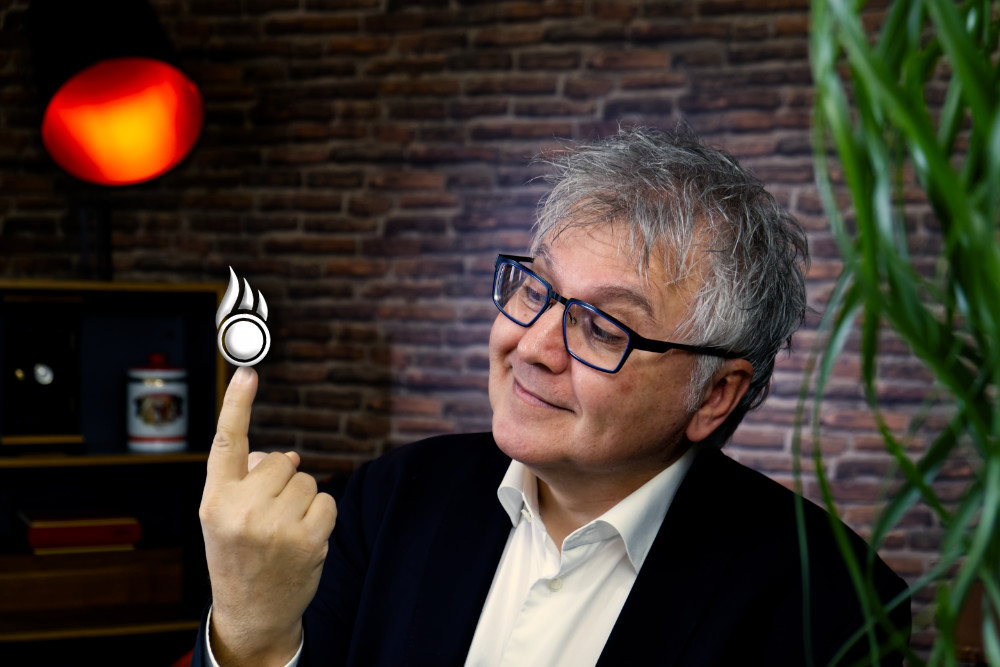
I founded Zigarren.Zone in 2014 because I wanted to help people understand cigars better. I want to explain the background, share knowledge and provide guidance. For me, a cigar is far more than just a consumer product. It is the result of agriculture, craftsmanship, experience and time. It is precisely this story that interests me.
Why I changed my approach
When I founded Zigarren.Zone in 2014, I wrote about cigars in much the same way as practically everyone else did at the time. I described flavours such as coffee, chocolate, leather or citrus fruits. That was part of the established vocabulary of the cigar world – and I followed suit.
Over the years, however, I began to question this approach more and more. The more I delved into tobacco cultivation, fermentation, blend development and the manufacture of cigars, the clearer it became to me that these terms do not explain why a cigar is the way it is. They merely describe personal associations.
At some point, it just didn’t feel right to me anymore.
That is why I completely revamped Zigarren.Zone in July 2026. Since then, the focus has shifted away from food-related associations and onto the tobacco itself – its origin, its processing and the factors that shape a cigar.
This change is not a criticism of others. It is the result of my own journey. These days, I am no longer interested in what a cigar reminds me of. I am interested in why it behaves the way it does.
An example
Previously: «The cigar has notes of coffee, dark chocolate and a hint of leather – a wonderful blend on the palate and very well balanced.»
Today: «The cigar develops a strong character whilst remaining very well-balanced. Why is this the case? Careful fermentation reduces unwanted bitter compounds, the blend ensures balance, and the construction allows for a consistent smoking experience.»
It is precisely these connections that interest me, because they explain tobacco. Descriptions involving food, on the other hand, describe personal associations – not the tobacco itself.

My workplace in Liestal. This is where I write articles, reviews and in-depth features with the aim of explaining cigars in a way that’s easy to understand – not just describing them.
Invitation from Zigarren.Zone
Have you heard of the new ‘sensreset.’ section yet? Have a listen!
Not everyone likes the taste of coffee and leather
Another reason for this approach is that many cigar smokers find traditional flavour descriptions rather unhelpful. They read about nuts, leather, coffee or cedar wood, but do not recognise these impressions for themselves and are disappointed because the cigar tastes different to what they expected. Personal associations are neither right nor wrong – but they are of limited help in understanding the tobacco. That is why I focus on characteristics that can be observed, explained and understood.
Where do flavour descriptions come from?
The language of flavour descriptions, which is now widely used, did not originate in the world of cigars. This is pointed out by Philippo Costi in his guest article from 5 June 2026 According to Zigarren.Zone:
The real revolution began with wine. From the 1970s and 1980s onwards, critics such as Robert Parker helped to popularise a highly descriptive style of wine tasting. Tasting notes became more precise, more vivid and increasingly comparative. Wine was no longer simply structured, elegant, tannic, fresh or long-lasting. It became a universe of blackcurrant, graphite, tobacco, cedar, cherry, violet, truffle, leather and spices. This vocabulary spread further. It found its way into the worlds of whisky, coffee and chocolate. And from the 1980s onwards – but particularly in the 1990s – it finally reached the world of cigars.
My aim
I’m not just interested in the question: „What’s this cigar like?“ Above all, I’m interested in: „Why is this cigar the way it is?“ I want to explain the connections, challenge myths and make complex topics easy to understand. If, after reading an article, you know more about cigars than you did before, I’ve achieved my goal.
My stance
Everyone experiences a cigar differently. Taste is subjective. That is why I make a conscious distinction between personal impressions and verifiable facts. Where facts are available, I rely on verifiable information. Where I describe my personal experience, I make this clear. I don’t want to tell anyone what they should taste. I want to explain why a cigar is the way it is.
How I view cigars
For me, the focus is on tobacco. That’s why I’m particularly interested in:
- the origin of the tobacco leaves,
- Soil and climate,
- Fermentation and ageing,
- the glare,
- the design,
- Smoking characteristics and burn rate,
- Smoke profile and balance,
- Strength and development throughout the smoking process,
- as well as the quality of the craftsmanship.
These properties can be observed, described and explained.
My approach to wine tasting
I judge cigars on their own merits. Many tastings draw on the language of wine and describe flavours such as coffee, chocolate, leather or citrus fruits. Such associations can be interesting, but they are always personal.
My focus is on the tobacco itself. I am interested in how a cigar’s smoke profile, balance, intensity, maturity, construction and development come together. I firmly believe that an outstanding cigar should, first and foremost, taste of high-quality, carefully processed tobacco.
What my articles are intended to achieve
Each article should answer at least one important question:
- Why was this blend formulated in this way?
- What is the purpose of the cover page?
- How does fermentation affect tobacco?
- Why does the smoke pattern develop in this way?
- Why does the smoke pattern develop in this way?
- What role does the format play?
- What are the effects of storage?
The cigar featured here is often an example of a broader theme.
My responsibilities
I treat producers, blenders, retailers and readers with respect. Praise and criticism should be justifiable. I do not publish speculation or unfounded claims. My aim is to provide a fair, independent and transparent assessment.
My aim
I don’t just want to write about cigars. I want to help people understand cigars better. After all, when you understand what you’re smoking, you often enjoy a cigar more fully. That’s exactly what Zigarren.Zone is for.
Further reading
- Understanding cigars: Here you’ll find the basics of cigars explained in simple terms – from tobacco, blends and fermentation to construction, smoking characteristics and terroir.
Transparency
This article is based on my experience as a cigar connoisseur since 1996, on specialist literature and – where available – on scientific publications. The aim is to explain the relationships in a way that is easy to understand and to base observations on verifiable evidence wherever possible.
- Hu, W. et al. (2022): Study on the chemical compositions and microbial communities of cigar tobacco leaves fermented with an exogenous additive. Scientific Reports. → Fermentation, chemical changes and microbial processes in cigar tobacco.
- (2023) Study on the correlation between the dominant microflora and the main flavour compounds in the fermentation process of cigar tobacco leaves → Investigates the relationships between dominant microorganisms and key chemical indicators.
Free eBook: PURO – A Journey to the Heart of the Cigar.
Forget superficial flavour lists. As a thank you to the zigarren.zone community (since 2014) I’ll give you my complete eBook as a PDF. Experience a fascinating glimpse behind the scenes: from the very first lighting, through the secret of ageing, to the true art of the blender. You’ll receive the download link just in time for Christmas 2026, sent directly by email.
 Deutsch
  English (UK)
  Français
  Italiano
  Español