
Observe cigars rather than judge them – How to understand cigars better


Observing a cigar rather than judging it 7 Two people. The same cigar. Imagine two aficionados. Both are sitting at the same table. Both are smoking the same premium cigar. Both start at the same time. After an hour, they compare their impressions. The first says: “Fantastic. Just my sort.” The second replies: “It didn’t really do it for me.”
Which of the two is right? Both.
Because they weren’t rating the same cigar – but rather their own personal experience. This is precisely where the difference between rating and observing begins.
This article is part of the „Understanding Cigars“ series – a series covering the basics of cigars by Zigarren.Zone. You can find the whole series here
In this article
A brief explanation
Observing a cigar means assessing its characteristics as objectively as possible, rather than immediately forming a personal judgement. Aspects to be observed include, for example, draw resistance, burn, smoke density, consistency, balance, strength and the development of the blend. An assessment, on the other hand, is always subjective and depends on personal preferences, experience and the situation at hand. Those who observe first and only then form an opinion gain a much better understanding of cigars.
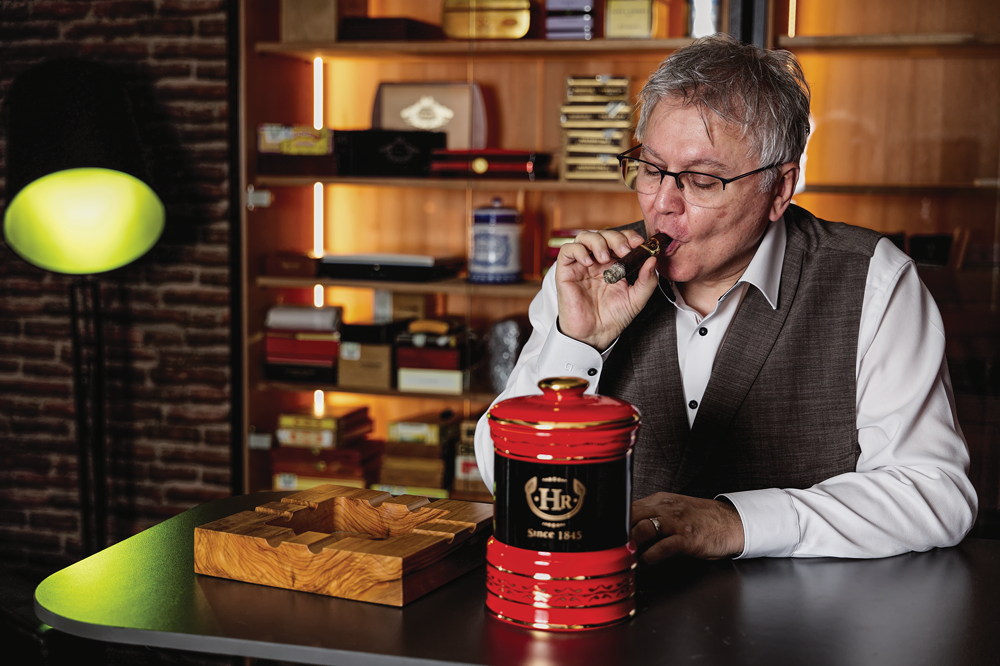
A cigar does not reveal itself with the first puff. Those who observe it carefully often discover more than a quick judgement of its flavour would suggest.
Why reviews are always subjective
Everyone has their own preferences. Some prefer mild cigars. Others seek strength and intensity. Some like a smooth draw, whilst others prefer a slightly tighter draw. Your form on the day, your mood, what you’ve eaten, what you’ve drunk, or your surroundings also influence your personal experience. That’s why the same cigar can elicit different reactions in different people. This is perfectly normal. A judgement therefore primarily reflects the person making it, rather than the cigar itself.
To observe is to describe
An observer first tries to establish what is actually happening.
For example:
- How evenly does the cigar burn?
- How thick is the smoke?
- Does its strength change?
- Does the blend remain harmonious?
- Is the pull constant?
- Is the smoke pattern developing evenly?
- Does the character remain the same right to the end?
All these questions can be observed. They do not require any personal preference.
The pitfall of judgements of taste
Many reviews begin with statements such as: „This cigar tastes excellent.” Or: “I don’t like this cigar.” Such statements are honest. However, they are of limited help to the reader. After all, what one person likes may be precisely the reason why another person chooses not to buy it. The real purpose of a review is therefore not to convey personal preferences. It is to explain the characteristics of a cigar in a way that is easy to understand.
Observation enables comparison
Imagine two car reviewers. The first writes: “I don’t like this car.” The second writes: “The steering is precise, the chassis remains stable even in fast corners, and the brakes respond smoothly.” Which review is more helpful to you? Probably the second one. Not because it’s objective in an absolute sense, but because it describes what others can observe too. That’s exactly how good cigar journalism works.
The cigar doesn’t have to prove anything
Sometimes one gets the impression that a cigar must constantly surprise the smoker. It must become more intense. Become more complex. Constantly change. But a cigar isn’t there to put on a show. Its purpose is to reproduce the blend exactly as the master blender composed it. Whether you like this blend is another matter. First of all, you should be able to recognise what it actually offers.
Observation changes one’s perspective
Anyone who observes a cigar notices things that were often overlooked in the past. For example:
- How clean is the train when it sets off?
- How stable do the ashes remain?
- How quiet is the burn-off process?
- Does the smoke density change?
- Will the balance be maintained?
- How does a cigar react to increasing heat?
- Does the blind remain closed right until the end?
The more you observe, the less you rely on individual taste sensations.
Good questions rather than hasty judgements
Next time you smoke, try not to decide straight away whether you like the cigar. First, ask yourself a few questions:
- What makes this cigar special?
- How is it different from the others?
- Will her character remain the same?
- Does the blend work well together?
- How carefully does it appear to have been made?
- What decisions made by the Blender can be identified?
These questions often lead to a deeper understanding than a simple “good” or “bad”.
Why observation is more respectful
Behind every cigar lie years of work. Tobacco farmers tend their plants over many months. The leaves are harvested, fermented, cured, sorted and finally rolled by hand. Not every cigar will suit your personal taste. Nor does it need to. However, if you take the time to observe it first, you’ll recognise the craftsmanship involved before forming your own opinion. This fosters respect for the product – regardless of whether you end up preferring it yourself.
Observing does not mean having no opinion
It is important to have your own opinion. It is part of the enjoyment. The difference lies simply in the order of things. First, observe. Then, understand. Only then should you evaluate. This leads to a judgement based on verifiable observations, rather than merely on a spontaneous impression.
Things you could try with your next premium cigar
For the first third, make a conscious effort to put all notions of taste aside. Instead, focus on what you can see and experience:
- How does the train behave?
- How does the volume of smoke change?
- Do the embers stay even?
- Does the intensity change gradually or in sudden bursts?
- Does the blend seem calm or restless?
- Will the cigar remain true to its own style right to the very end?
You’ll be surprised at how much you can observe without jumping to conclusions.
Conclusion
An assessment is personal. An observation is objective. Both have their place. But anyone who really wants to understand cigars does not start with a judgement, but with attention. Because a cigar does not demand a rating straight away.
It invites us to take a closer look. And often it reveals the most precisely when we pause for a moment and refrain from judging it straight away.
Frequently Asked Questions
Why should I observe a cigar first, rather than judging it straight away?
An assessment always depends on personal preferences. By first observing the draw, burn, smoke texture, balance and the development of the blend, one can better understand the characteristics of a cigar and only then form a well-founded judgement.
Is a cigar review always subjective?
Yes. Taste, experience, mood and personal preferences all influence every assessment. That is why two people may judge the same cigar differently, even though they are observing the same characteristics.
What should I look out for when examining a cigar?
Pay attention to the draw, the burn, the density of the smoke, the balance, the strength and how the flavour develops as you smoke. These characteristics are much easier to compare than personal taste impressions.
Why does Zigarren.Zone focus on observations rather than flavour notes?
The aim is to explain the identifiable characteristics of a cigar. Observations help us to better understand its construction, blend and workmanship, whilst descriptions of flavour always depend on individual perception.
The comprehensive guide to cigars
Every cigar tells its own story. If you really want to understand them, you should also know how tobacco is grown and processed, and why a cigar behaves the way it does. This educational series takes you step by step through the most important basics – explained in an accessible way and backed by scientific evidence.
How aroma descriptions are created – and where their limitations lie
Many cigars are described in terms of their flavour. But does that really capture the essence of the cigar? Find out why the tobacco itself is the most important benchmark.
→ How aroma descriptions are created – and where their limitations lie
What really makes a cigar strong? Explaining a cigar’s strength
Strength and flavour are two completely different characteristics. Find out why the same cigar can be perceived differently by different people.
→ What really makes a cigar strong? Explaining a cigar’s strength
What fermentation actually does
Fermentation is one of the most important stages in tobacco processing. Find out what happens to the tobacco during this process and why it is so crucial for the final cigar.
→ What fermentation actually does
Cigar Wrapper – Why wrappers are underrated
The wrapper is much more than just an attractive covering. Find out how it influences the character of a cigar and why its colour is often misinterpreted.
→ Cigar Wrapper – Why wrappers are underrated
Cigar Blend – What really makes a great blend
A great blend doesn’t happen by chance. Learn how different tobaccos come together to form a harmonious whole, and why balance is more important than dramatic changes.
→ Cigar blends: What really makes a great blend
How tobacco changes physically when smoked
As you smoke, the tobacco changes with every puff. Discover how heat, moisture and the moving ember affect the smoking experience.
→ How tobacco changes physically when smoked
Why consistency is a greater achievement than constant change
Many people believe that a cigar must constantly change. Find out why consistency, in particular, can be a sign of great craftsmanship.
→ Why consistency is a greater achievement than constant change
Terroir Cigars – Soil, climate and tobacco cultivation explained simply
Climate, soil and origin shape the tobacco long before it is harvested. Discover how the terroir influences the character of a cigar.
→ Terroir Cigars – Soil, climate and tobacco cultivation explained simply
Observe cigars rather than judge them – How to understand cigars better
You don’t need to rate a cigar to understand it better. Learn what to look out for and how your perspective on cigars will change.
→ Observe cigars rather than judge them – How to understand cigars better
Why Cigars Are Part of Our Cultural Heritage – An Explanation of Craftsmanship, History and Tradition
Cigars are much more than just a luxury item. Find out why they have been part of craftsmanship, history and culture for centuries.
Scientific sources
- Spence, C. (2021). What is the relationship between the presence of volatile organic compounds in food and drink products and multisensory flavour perception? The review shows that taste arises from the interplay of several senses, as well as from expectations and experiences. It supports the view that personal judgements are always subjective.
- Sandri et al. (2021). Pain, Smell and Taste in Adults: A Narrative Review of Multisensory Perception and Interaction. The authors describe how smell, taste and the brain’s processing of these sensations work together to shape our perception. As a result, different people may experience the same cigar in different ways.
If personal opinions are subjective – how can you tell what a cigar is really like?
The answer lies not in individual judgements of taste, but in an understanding of processing, blending and consistency. These three articles show what really matters.
- Why consistency is a greater achievement than constant change
- What really makes a great blend
- What ‘strength’ really means in the context of a cigar
Photos
- Vasilij Ratej
 Deutsch
  English (UK)
  Français
  Italiano
  Español
A great report – tobacco is tobacco, is tobacco!
(Clarification by Don Alejandro Robaina)
Thanks to him, I learnt a great deal …
Don Alejandro Robaina – ihn hätte ich so gerne kennengelernt! Aber dafür habe ich ja jetzt dich ☀️