
Blind cigar tasting: What does it reveal without its name?


Before me lies an anonymous cigar. No brand, no origin, no vitola – just the cigar and what it reveals to me as I smoke it. You can experience exactly this for yourself: On 23 September 2026, at MADURO in Olten, I will be leading a group blind tasting. A Churchill, no cigar band, no brand name, no price – it is only after the tasting that we find out what we have actually been smoking.
How much does a name influence what you perceive? Find out for yourself. Please read this review to discover just how fascinating this can be.
In this review
Observed during the tasting
- Smoke pattern: Medium density, dissipates normally. In the first half, the smoke becomes denser; in the second half, it becomes even denser.
- Balance: Slightly bitter with a little more acidity, yet well-balanced. Very slightly salty (a hint). Complex; a distinct sweetness becomes noticeable in the final third.
- Development: Umami is present from the outset and well-balanced. As the flavour develops, the umami becomes more pronounced, accompanied by increased acidity and bitterness. A hint of saltiness remains faintly detectable. From the second half onwards, there is a pronounced salivation response, with plenty of umami, a touch of sweetness, and increased bitterness and acidity. The flavour profile becomes more complex and deeper, and the sweetness intensifies.
- Strength: 2/5 → 3/5
- Design: The leaves are evenly distributed throughout the roll, very well rolled, and the air channels are open.
- Burn-up: Steady and slow.
Smoke pattern – How does the smoke behave?
Right from the very first puffs, the smoke is of medium density. I watch as it hangs in the room, dissipating neither too quickly nor too slowly. As the first half progresses, the picture changes: the smoke gains volume and becomes noticeably denser. If I give the cigar time and observe how it develops in the second half, the smoke settles on the tongue in an even more compact and dense manner.

The cigar remains completely anonymous. The only thing that matters is what can actually be observed during the tasting.
Why does the cigar behave like this?
The density of the smoke and the speed at which it dissipates in the room can be influenced, amongst other things, by the density of the tobacco, its natural moisture content, the cut of the filler leaves and the individual’s smoking rhythm.
Balance – How harmonious is the blend?
Right from the first third, I notice a delicate balance: a slight bitterness combines with a somewhat more pronounced acidity to create a harmonious balance. In addition, a very delicate, almost elusive hint of saltiness accompanies the mouthfeel. As the smoke progresses, this balance is maintained, whilst the complexity increases. In the final third, a distinct sweetness finally emerges, blending powerfully into the overall profile.
What is umami?
In ‘Tasting Notes’, the term Umami used to describe a subtle, savoury and mouth-watering depth in the smoke. Unlike distinct flavours such as spiciness or sweetness, umami creates a balanced, rich and long-lasting flavour sensation on the tongue and in the finish.
Why does the cigar behave like this?
The balance of flavours and the interplay of the basic sensory impressions generally depend on the selection of tobacco varieties, the position of the leaves on the plant, the degree of fermentation and the precise composition of the blend. The length of ageing also influences the mouthfeel.
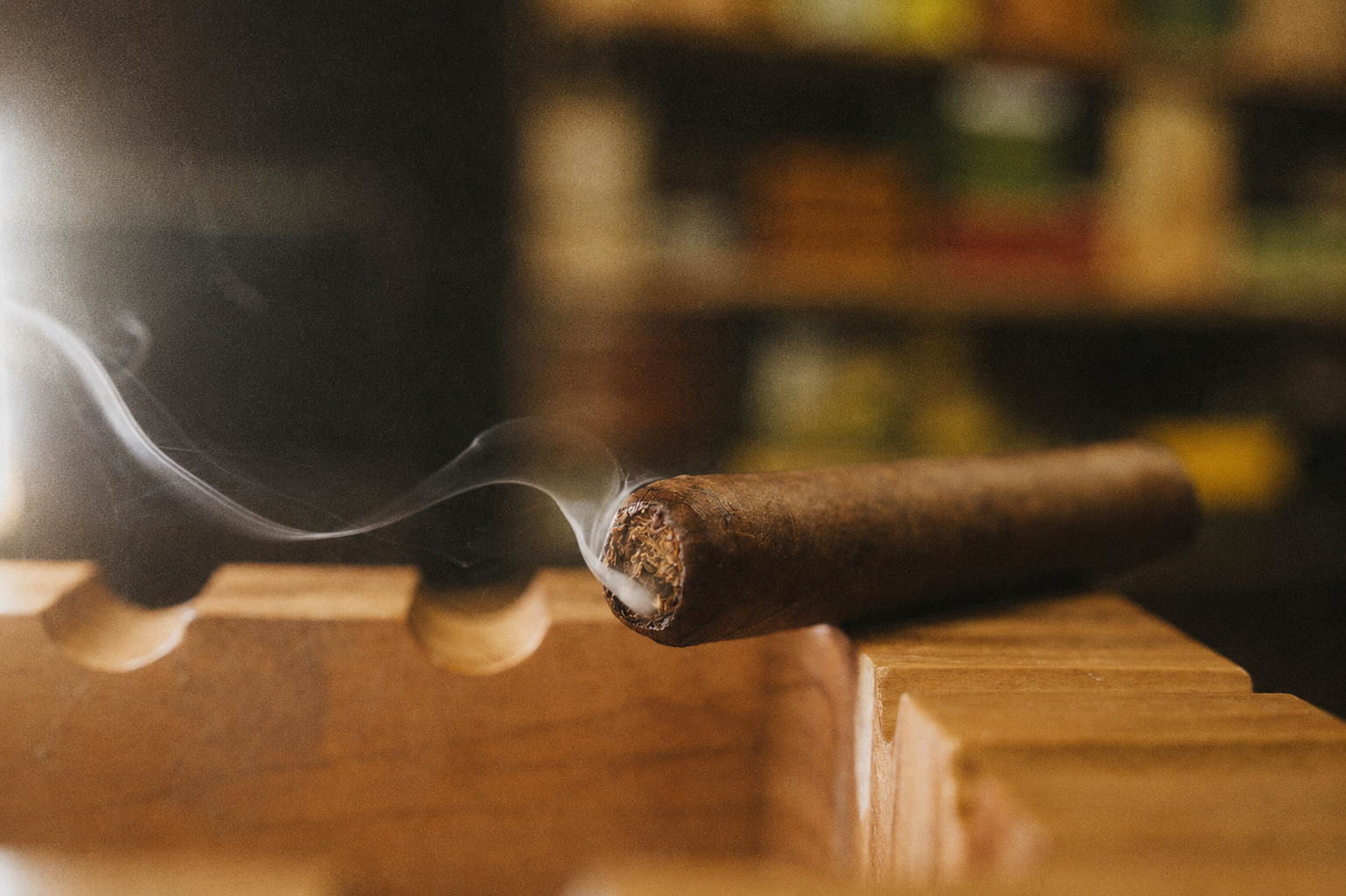
Smoke profile: Initially, the smoke is of medium density. Its density increases during the first half, and becomes even denser in the second half.
Invitation from Zigarren.Zone

Development – Is the cigar changing?
At the outset, the umami note is present and blends harmoniously into the overall balance. As time goes on, I notice a steady intensification: the umami becomes more pronounced, along with the increasing acidity and bitterness. The salty note remains faintly perceptible in the background.
From the second half onwards, my mouth reacts noticeably with a surge of saliva. The flavour profile becomes more complex, gains depth and, alongside the acidity and bitterness, reveals a steadily increasing sweetness.
Why does the cigar behave like this?
Changes in flavour whilst smoking are caused by the moving burn zone, the heating of the remaining cigar body, the accumulation of condensates in the rear section, and the continuous concentration of the smoke.
Strength – How does strength develop?
In the first third, I perceive the cigar as having a subtle strength, which I would rate at 2/5. As I continue, the strength gradually and steadily increases. Towards the second half, the perceived strength settles at a moderate level of 3/5.
Why does the cigar behave like this?
The intensity and strength of a cigar are generally determined by the proportion of nicotine-rich tobacco leaves (such as Ligero) it contains. Furthermore, the perceived strength usually increases the shorter the cigar is smoked and the closer the ember gets to the mouthpiece.

Umami becomes more pronounced, whilst acidity and bitterness become more noticeable. Later on, increased salivation and a growing sense of sweetness become apparent.
What happens when your brain suddenly has to fly blind? Our minds are lazy: they taste what the label promises them. If that signal is missing, your brain releases dopamine in a flash – driven by pure curiosity. Your neurological reward system switches to maximum alertness across all your senses. Experience it at 23.09.2026 in the Maduro Olten under the direction of Vasilij Ratej, how your perception is completely rewired without the brand filter. 👉 Activate your senses now & secure your place
Construction and burn – How clean is the cigar?
A look at the burn and the draw reveals a cigar crafted with great care. The leaves in the filler are evenly distributed, and this cigar is very well rolled. The air channels are open, allowing for an effortless draw. The cigar burns evenly and slowly from start to finish, without the need for any adjustments.
Why does the cigar behave like this?
Even burning and open air channels depend on the careful arrangement of the leaf layers (stripping and rolling technique) as well as the correct moisture content during rolling and storage.
The effects of fermentation and ageing
My notes indicate that the cigar is around 3 to 4 years old. It spent three of those years in the taster’s own humidor, having been rolled approximately one year before being stored. The tobacco is well-balanced throughout the smoke and, from the second half onwards, develops a distinct depth and causes a strong salivation.
Why does the cigar behave like this?
During fermentation prior to rolling, proteins and bitter compounds in the tobacco are broken down. After rolling, slow maturation processes continue over the years, which can soften the harshness and round off the flavour profile.
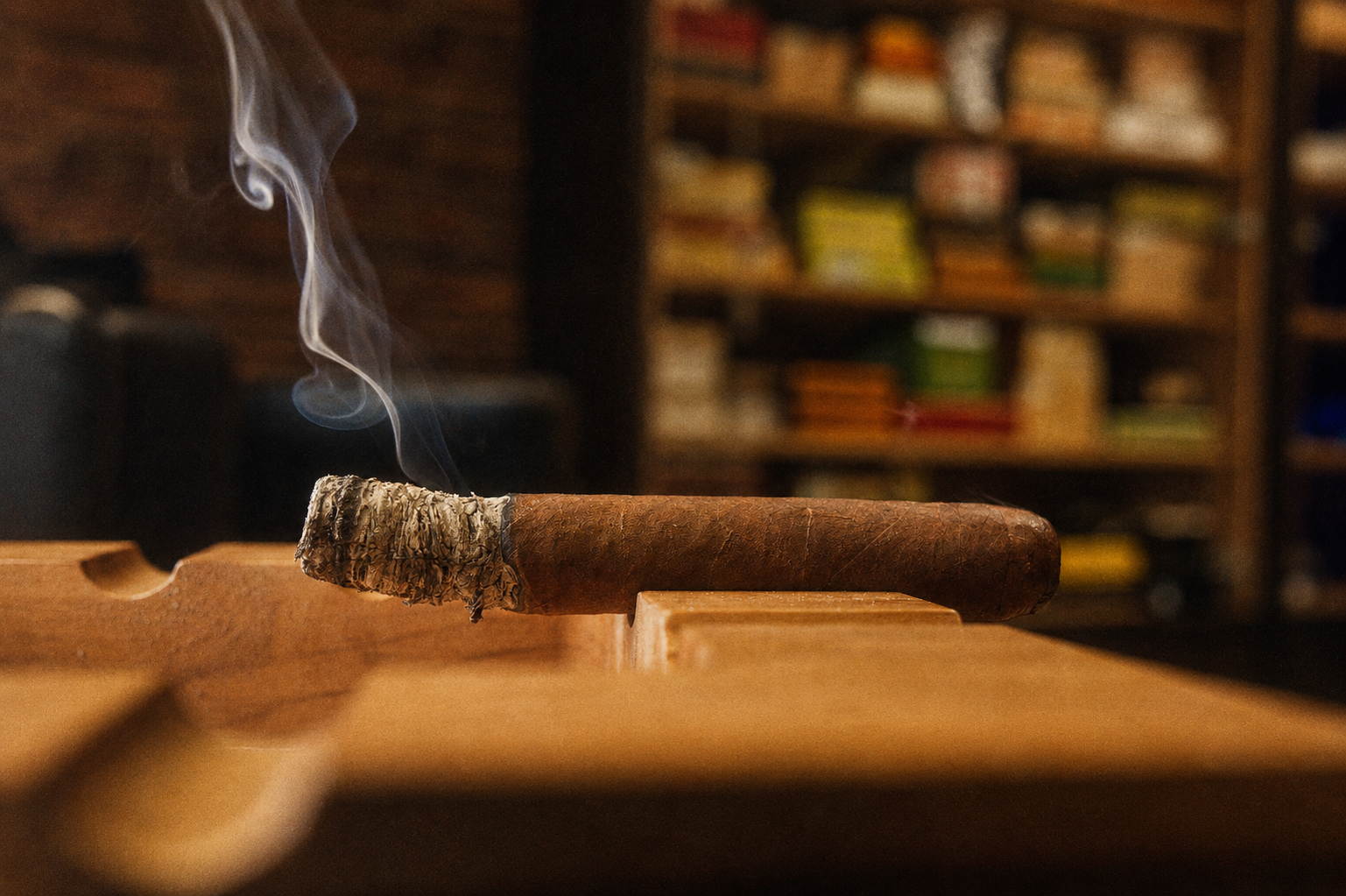
Construction and burn: The filler appears evenly distributed; the air channels are open. The burn is even and slow throughout the tasting.
Conclusion
This Blind tasting This cigar was a masterpiece of craftsmanship, with an open draw and a very even, slow burn. In terms of structure, it impressed with a strength profile rising from 2/5 to 3/5, as well as a noticeable thickening of the smoke in the second half. The flavour profile remained consistently balanced between bitterness, acidity and umami throughout, whilst from the middle section onwards there was a significant increase in salivation and, in the final third, a distinct sweetness emerged.
Frequently Asked Questions
What is meant by a ‘blind tasting’ when it comes to cigars?
In a blind tasting, a cigar is sampled without its band and without any knowledge of its brand, origin or price. The appeal lies in evaluating the cigar entirely free from brand imagery or preconceptions, relying solely on one’s own senses to experience it without bias.
Why is a blind tasting a good way to assess your own sense of taste?
Without visual cues or preconceptions, the brain switches to a state of maximum alertness. A blind tasting sharpens the sensory perception of smoke profile, strength and balance. It helps to objectively train and reassess one’s own palate, free from the influence of marketing claims, price ranges or brand names.
How does a blind tasting actually work in practice?
The cigars are anonymised in advance so that their appearance remains neutral. Whilst smoking, all observations regarding construction, burn, balance, strength and draw are recorded on a neutral tasting sheet. Only once the cigar has been smoked in full is the brand and vitola revealed.

Final stage: The intensity increases from 2/5 to 3/5. At the same time, the sweetness becomes noticeably more pronounced in the final third.
What if your taste is fooling you all the time? 👇 Documentary film, click on the image👇
👉 If you don't have a YouTube channel, please click here and you can watch the film without an account.

Further reading
Sources and background information
This article is based on my tasting of the cigar described, drawing on my own experience as a cigar connoisseur since 1996, as well as on specialist literature on tobacco, fermentation, ageing and the physical processes that occur during smoking. In addition, recent scientific publications on tobacco fermentation and on heat and mass transfer in tobacco have been taken into account.
- Hu, W. et al. (2022): Study on the chemical compositions and microbial communities of cigar tobacco leaves fermented with an exogenous additive. Scientific Reports. → Fermentation, chemical changes and microbial processes in cigar tobacco.
- (2023) Study on the correlation between the dominant microflora and the main flavour compounds in the fermentation process of cigar tobacco leaves → Investigates the relationships between dominant microorganisms and key chemical indicators.
Photos
- Vasilij Ratej
Note regarding the photos: All the photos were taken by me and edited in Affinity Photo. To achieve the final cinematic look, I also carried out digital colour grading with the aid of AI. The subject, composition and image content remained unchanged.
 Deutsch
  English (UK)
  Français
  Italiano
  Español